
Sample making is the core and initial link of handbag manufacturing in factories. It acts as a bridge between customer design requirements and mass production. A high-quality handbag sample can accurately verify design feasibility, confirm material matching, test structural stability, and help customers confirm order details. For laimi handbag factories, standardized sample production procedures are the foundation of reducing production errors, controlling costs, and improving customer satisfaction. The whole sample-making process includes six key steps: order analysis, material preparation, cutting, sewing assembly, quality inspection and final confirmation, as well as sample filing.
- 1 Requirement Analysis and Technical Confirmation.
Before starting sample production, the technical team first conducts in-depth analysis of customer design drawings, reference samples and customized requirements. Staff need to confirm core details including handbag style, size, color, material type, hardware accessories, stitching technology and functional design. For special requirements such as waterproof treatment, embossed logo, special zipper matching and adjustable straps, technical personnel will record all parameters in the sample production list.
This step avoids structural defects in subsequent production. For example, for crossbody bags and backpacks with bearing functions, the factory will focus on checking the firmness of the connection between the strap and the bag body to ensure the sample meets daily use standards. After all details are confirmed, the technical department issues a formal production instruction sheet to guide the subsequent process.
- 2 Material Selection and Preparation.
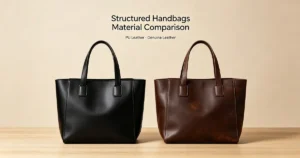
Material quality directly determines the texture and durability of handbag samples. According to the technical list, the material department selects matching raw materials, including leather, canvas, nylon, PU fabric and other main materials, as well as auxiliary materials such as lining, sponge, thread, zipper, metal buckle and rivet.
All materials will undergo preliminary inspection before use. The staff check whether the fabric has color difference, broken threads and scratches, and test the gloss and firmness of hardware accessories to ensure they are consistent with customer requirements. For customized materials with special colors and patterns, the laimi factory will first make color cards and pattern samples for customer confirmation to ensure no deviation in the overall style of the handbag.
- 3 Precision Cutting of Materials.
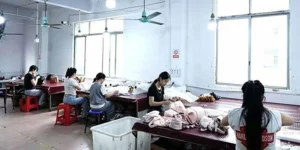
Cutting is a key step to ensure the standard size of the handbag sample. Professional cutters cut the fabric and auxiliary materials strictly according to the paper pattern drawn by the technical department. In small-batch sample making, manual cutting is mostly adopted, which is more flexible for special-shaped parts and fine details of designer bags.
During cutting, the staff will reasonably arrange the layout of materials to avoid waste while ensuring the symmetry and flatness of each component. The main bag body, side panels, bottom plate, straps and inner pocket materials are cut separately and marked uniformly. After cutting, all accessories will be sorted and inspected again to check for size errors and fabric damage, and unqualified parts will be re-cut immediately.
- 4 Sewing and Assembly Processing.
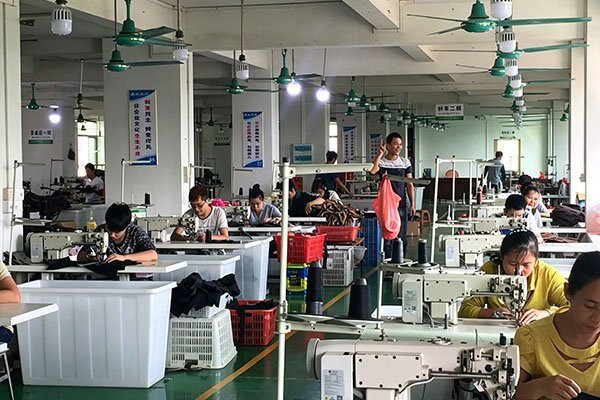
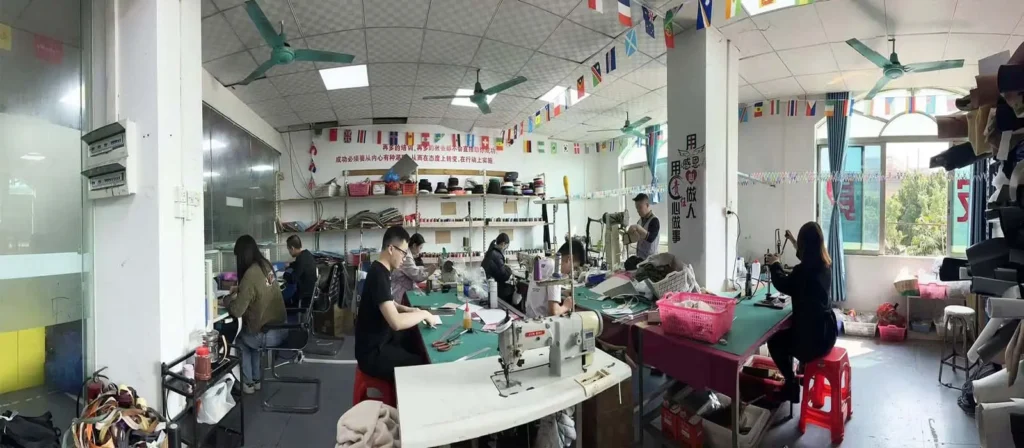
Sewing assembly is the core process of sample making, which determines the appearance and structural stability of the handbag. Senior sewing workers complete production in accordance with unified process standards. The production sequence is from inside to outside: first sew the inner pocket and lining, then assemble the main bag body, install zippers and hardware accessories, and finally connect the straps and adjust the overall structure.
In the sewing process, the laimi factory strictly controls the stitch density and flatness. The stitches of formal handbag samples are required to be uniform, straight and free of skipped stitches and loose threads. For stressed parts such as strap joints and bag openings, reinforced sewing is adopted to improve durability. After sewing is completed, workers will trim excess threads, smooth the fabric folds, and shape the handbag to make the overall appearance neat and three-dimensional.
- 5 Sample Inspection and Customer Confirmation.
The finished handbag samples will go through strict internal quality inspection first. The quality inspection team checks the overall size, color matching, stitching quality, hardware firmness, functional fluency and appearance cleanliness. They will test the flexibility of the zipper, the firmness of the metal buckle, and the bearing capacity of the straps to ensure the sample has no quality hidden dangers.
For unqualified samples, the laimi factory will record the problems and remake them in time. After passing the internal inspection, the standard samples will be sorted, packaged and sent to customers for confirmation. Customers can put forward modification opinions on size, color, technology and details according to the actual sample effect. The factory will adjust and optimize the samples again until the customers fully confirm and sign off.
- 6 Sample Filing and Production Standard Formulation.
After the customer confirms the final sample, the laimi factory will file and manage the official sample. The confirmed sample will be marked with style number, production date, material parameters and process standards, and stored in the special sample room. These confirmed samples are the unified standards for subsequent mass production, which can effectively avoid style deviation and quality inconsistency in batch production.
In addition, the technical team will sort out the complete process documents according to the final sample, clarify all production parameters, and train the production staff to ensure that every link of mass production is implemented in accordance with the sample standards.
Conclusion
Handbag sample making is a refined and rigorous systematic work, which integrates design understanding, material matching, manual technology and quality control. High-standard sample production not only reflects the professional manufacturing strength of the factory, but also lays a solid foundation for smooth mass production and long-term customer cooperation. Every qualified handbag sample is the precise presentation of the factory’s craftsmanship and service capability.
The content shared is hoped to be helpful to you. If you have any other questions that need to be addressed, you can email laimi handbag factory sale02@laimibags.com . We will do our best to solve your problems.