
When sourcing handbags for resale, brand retail or private‑label projects, one of the most fundamental decisions buyers face is material selection: PU faux leather or genuine leather. Each material brings distinct cost points, performance features and market positioning. For wholesalers, e‑commerce store owners and drop‑shipping partners, picking the right material directly impacts product pricing, target customers, profit margin and inventory turnover.
Many new bulk buyers struggle with this choice. Some assume genuine leather always equals higher quality, while others only chase low‑cost PU without understanding its limitations. This article breaks down PU and genuine leather handbags from cost, weight, durability, color flexibility, sustainability and real‑world wholesale scenarios, helping you make better purchasing decisions for your business.
1. What Is PU Leather & What Is Genuine Leather
Before comparison, let’s clarify the two materials.
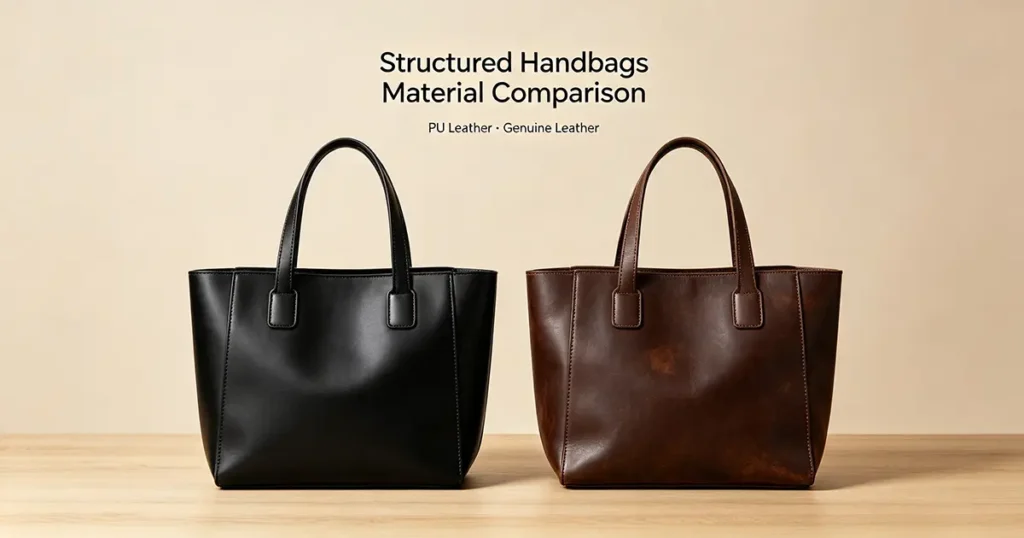
PU leather, also known as faux leather, is a synthetic material made of polyurethane coated on fabric base. Modern upgraded versions include GRS‑certified recycled PU, produced from recycled raw materials to meet global sustainable retail standards. It is the dominant material for mid‑range mass‑market handbags.
Genuine leather comes from animal hides. It goes through tanning and finishing processes. Real leather shows natural grain differences, and every piece has slight texture variations. It is widely used for high‑end luxury and premium accessory lines.
2. Cost Comparison for Bulk Orders
Cost is usually the top priority for bulk purchase.
PU leather offers obvious cost advantages in bulk production. Raw‑material supply is stable, production yield rate is high, and waste is low. This allows factories to deliver finished handbags at competitive unit prices. Recycled GRS‑certified PU costs slightly higher than regular PU, but still far below genuine leather. For buyers with limited budgets, PU enables you to launch diverse product lines, keep reasonable profit space, and cater to large‑volume fast‑fashion demands.
Genuine leather raw material itself carries high baseline cost. Tanning, cutting and waste rate further push up unit prices. Even entry‑level genuine leather handbags will have a much higher factory price. For small‑batch wholesale, MOQ for genuine leather items is often higher, and sample cost is expensive. If you run mid‑price retail, drop‑shipping stores or fast‑moving fashion lines, genuine leather will compress your profit margin or make your final selling price too high for mainstream consumers.
3. Weight & Daily‑use Comfort
Product weight heavily influences end‑customer satisfaction, especially for daily tote bags, shoulder bags and school bags.
PU handbags are noticeably lighter. Even large‑capacity styles keep comfortable overall weight. For office‑goers, students and parents purchasing kids’ bags, lightweight is a strong selling point. For wholesalers, lighter goods also cut down international shipping weight and logistics expense for bulk containers.
Genuine leather has considerable natural weight. A large genuine‑leather tote can become very heavy once filled with daily essentials. Some end‑users complain about shoulder pressure after long‑time carrying. It fits customers who prioritize premium texture, yet may not suit buyers looking for lightweight everyday bags.
4. Wear‑resistance & Durability
Durability decides return rate and customer review scores for your store.
Performance varies among different‑grade PU. Low‑grade cheap PU may peel, crack after months of use. However, well‑manufactured PU from reliable factories delivers solid wear‑resistance. It resists water and stain, requires almost no special maintenance. GRS recycled PU today can achieve excellent tensile and anti‑abrasion performance. For mass‑market fashion bags that get frequent daily use, qualified PU maintains stable performance throughout the product fashion cycle, keeping product complaint rates low.
High‑quality genuine leather ages uniquely. With proper care, it develops a vintage patina over years. But it also has weaknesses: it can scratch easily, is sensitive to water and humidity. Without maintenance, genuine leather may get moldy, harden or deform. For fashion‑focused fast‑cycle products, many consumers replace bags before leather reaches its full service lifespan.
5. Color, Pattern & Design Flexibility
Market‑trend responsiveness matters for wholesale handbag sellers.
PU leather shines in color and pattern options. Factories can produce nearly any Pantone color, from soft pastels to bold neon tones. Printing, embossing, debossing and logo hot‑stamping can all be realized on PU surface efficiently. When seasonal trends shift, you can quickly roll out new‑color collections. This makes PU perfect for seasonal limited lines, private‑label custom projects and children’s bags that need rich colorful styles.
Genuine leather has natural texture limits. Some bright, saturated or metallic colors are hard to achieve, and color inconsistency between batches is unavoidable. Complex printed patterns also bring extra processing cost. If you only need classic neutral tones such as black, brown and tan, genuine leather works well. But it is less flexible for fast‑changing seasonal color trends.
6. Sustainability: Recycled PU vs Genuine Leather
Sustainability requirements keep rising for global buyers. Amazon sellers, European retailers and brand clients frequently ask for relevant certificates.
Genuine leather is a natural material, yet traditional tanning processes may generate heavy‑polluting waste water. Animal‑origin properties also draw ethical debates from vegan consumer groups. Some customers actively avoid animal‑derived accessories.
Here recycled PU fills market gaps. GRS‑certified recycled PU uses recycled polymer raw materials, with complete traceable certification documents. It satisfies vegan‑friendly demands and meets ESG standards for many western retailers. It is important to note: not all PU is eco‑friendly. Always verify formal certification instead of only accepting verbal claims from suppliers.
Final Takeaway
Neither PU nor genuine leather is universally “better”. The right material depends entirely on your brand positioning, target audience, budget and market demand.
For most small‑to‑medium bulk buyers, high‑quality PU leather offers outstanding overall balance: affordable bulk price, lightweight comfort, flexible color customization, and optional recycled eco‑friendly grades. It is the most practical solution for fast‑moving fashion handbag wholesale.
The content shared is hoped to be helpful to you. If you have any other questions that need to be addressed, you can email laimi handbag factory sale02@laimibags.com . We will do our best to solve your problems.