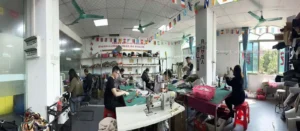

Every defective handbag usually originates from negligence in a certain production link. From sample confirmation, cutting, sewing, edge finishing to final packaging, every procedure has hidden risks that may lead to customer complaints. Laimi Handbag Factory sorts out core control points in ladies’ handbag mass production to avoid common quality defects.
- I. Proofing & Pre-production Stage
No materials can be replaced at will. When changing leather, accessories, glue, or edge oiling materials, updated color cards/samples must be sent to the customer for confirmation;
Check the structural stress points: shoulder strap base, handle, both sides of the bag opening, ear stud position. Plan for reinforcement in the sample, but no reinforcement in the large quantity production, which is very likely to cause breakage and customer complaints;
Test the material compatibility in advance: light-colored leather and dark-colored lining, contact position with hardware, check for migration and color transfer; glue must not corrode PU / paint surface;
Confirm the size tolerance standards and agree with the customer on the allowable error in length, width, and height to avoid inconsistent sizes in large-scale production;
Make the foam and liner hardness uniform to prevent some bags from standing upright and some from being soft and deformed.
- 2. Cutting Process
Avoid obvious skin scars, scratches, and color spots in the leather layout; symmetrical cutting pieces must be taken from similar positions to prevent color differences between the front and back;
Control waste while ensuring the uniformity of the texture direction (especially genuine leather, embossed PU);
Number and classify the cutting pieces to avoid mixing of large and small components;
Keep the cutting environment clean for the light-colored fabric to prevent oil stains and dust from adhering.
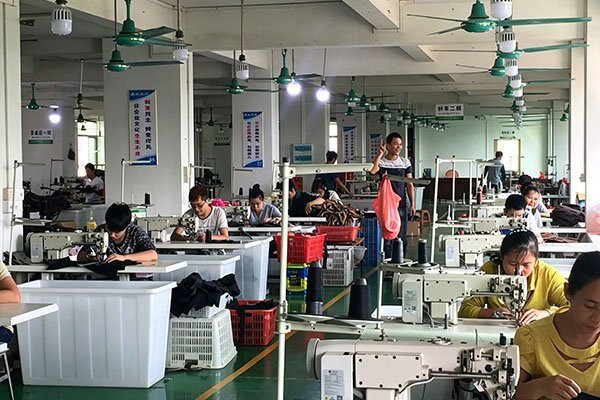
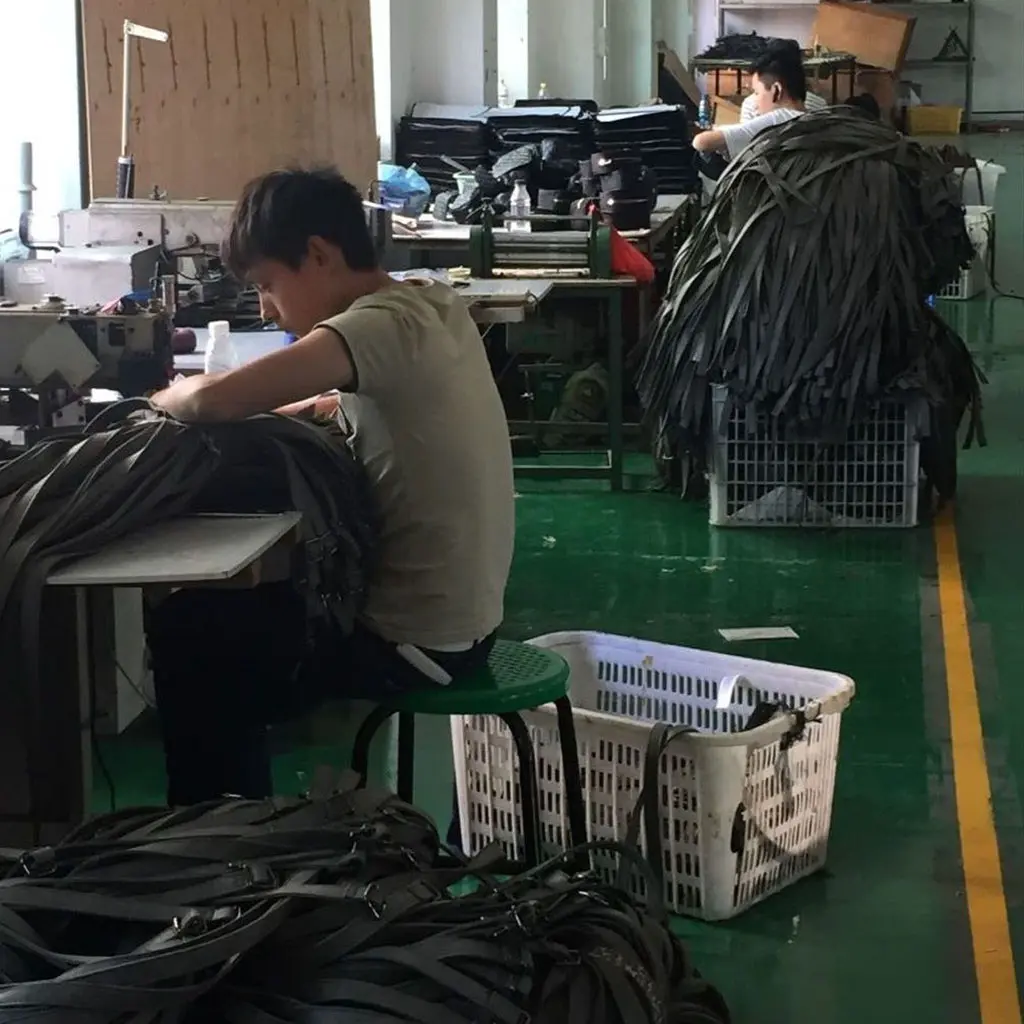
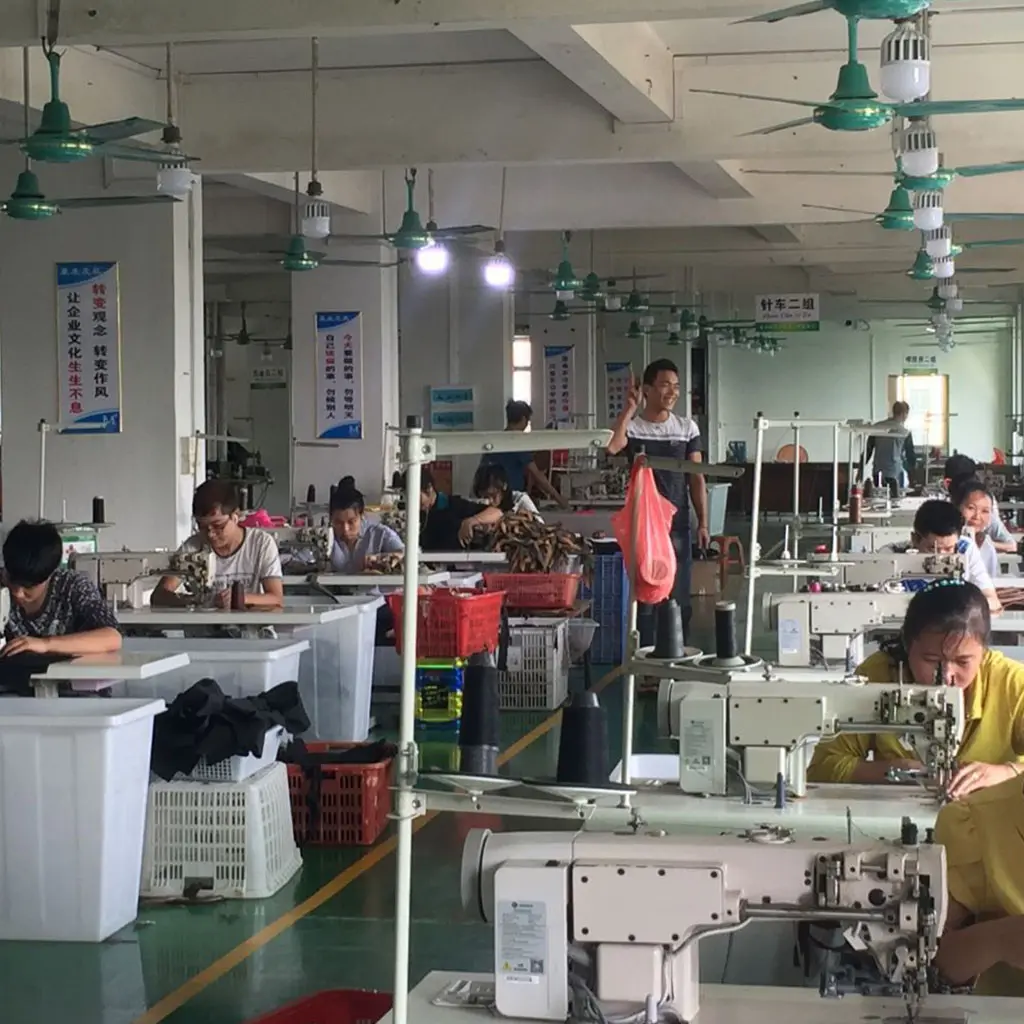
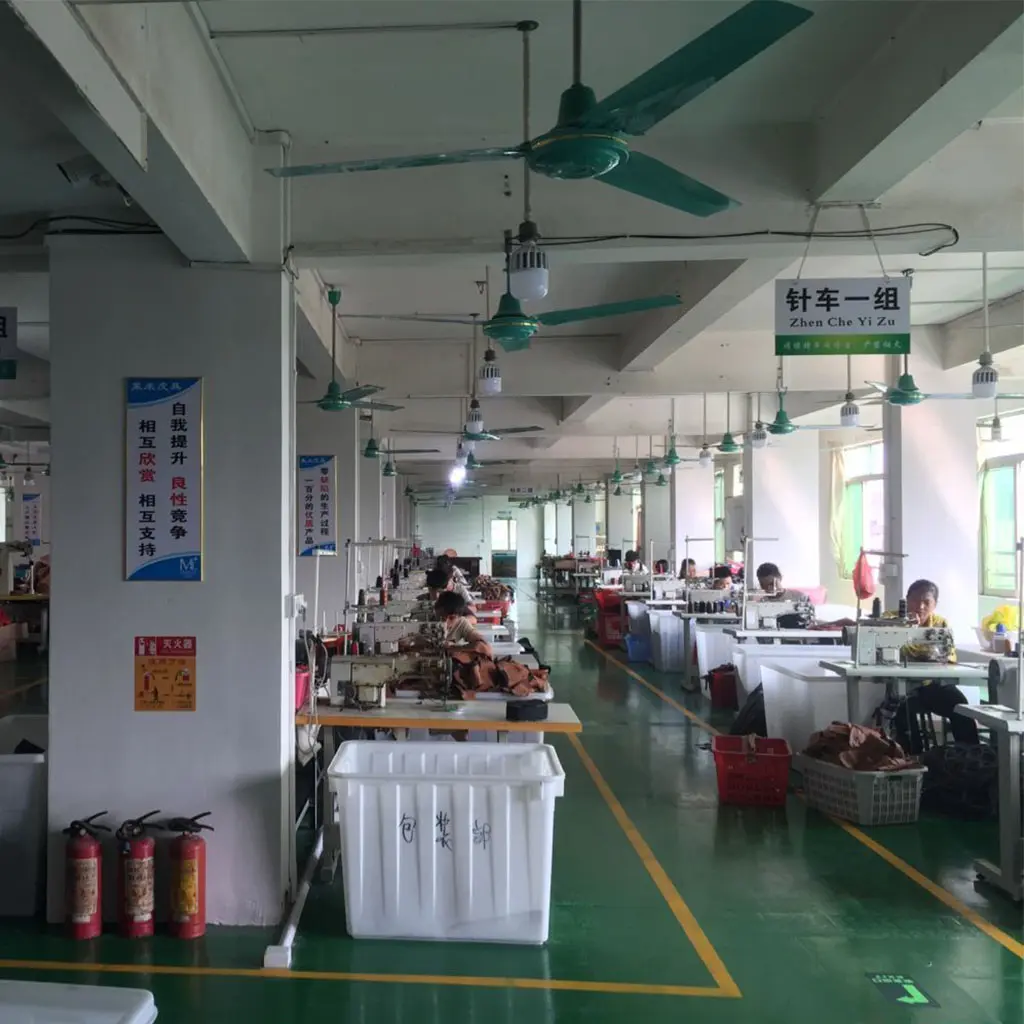
- 3. Needle and Sewing Workshop
Unify the needle spacing standard; prohibit skipping stitches, floating stitches, and throwing stitches at the corners and arcs;
Strictly distinguish the inner and outer thread colors; the exposed stitching color must be consistent with the confirmed sample;
The inner pocket must not be sewn closed, the pocket fabric must not be skewed, and the inner folds should be controlled as much as possible;
Concurrently control the thread ends; for large-scale production, develop the habit of cutting the thread at any time, as overseas buyers have extremely low tolerance for thread ends;
All teams should follow the same production methods to avoid “one team’s method for one production batch”.
- 4. Edge Oiling Process
The cutting edge of the pieces should be polished smooth; rough edges will directly cause bubble and detachment of the edge oiling;
The number of edge oiling layers and baking temperature are fixed; add thicker edge oiling in the bending area to prevent repeated bending and cracking;
Prohibit over-edge, uneven thickness of edge oiling; stack semi-finished products with the cutting pieces separated to prevent the un-dried edge oiling from sticking together;
Pay attention to temperature and humidity; in humid environments, edge oiling dries slowly, and it is prone to pinhole bubbles.
- 5. Hardware Assembly
Before assembly, conduct a comprehensive inspection of hardware: scratches, oxidation, color differences, tilted LOGO must all be eliminated;
The rivets and screws must be tightened properly, with reasonable looseness; too tight can easily damage the leather, too loose may fall off during transportation;
Test the smoothness of the lock, magnetic attachment opening and closing before assembly; the magnetic force must be uniform; inconsistent magnetic force is very likely to cause complaints;
The zipper and fabric belt should be of consistent tightness, smooth pulling, and avoid teeth popping and zipper head falling off.
- 6. Post-Drying Stage
Standardize the drying temperature and time; high temperature is likely to cause color change of the leather and melting of the coating;
The body shaping should be symmetrical, the bag opening should not be lifted, and the arc of both sides should be consistent;
Clean the glue marks, stains, and hardware fingerprints; light-colored bags must not be touched directly and extensively with hands.
- 7. Packaging and Shipping
Packages must be separated by isolation paper to prevent hardware from scratching the surface;
The filling paper should be of moderate hardness, and insufficient filling will cause deformation; hard filling materials will leave permanent indentations under long-term pressure;
For ocean shipping orders, it is necessary to place desiccants to prevent the leather from moldy and the hardware from oxidizing and rusting in high-humidity environments;
Do not directly stick transparent adhesive tape to the leather surface; the residue of the adhesive and the damage to the fabric coating must be avoided;
The label, washing water mark, origin label, and model must be strictly checked against the sample to avoid wrong versions;
The outer box label and box sorting list should be checked in advance to avoid color and model confusion, and short shipments.
- 8. General Management Hidden Points
Light-colored bags and white bags are recommended to be produced separately / in separate production periods to prevent color transfer;
The semi-finished product warehouse should be protected against moisture and dust, and the stacking height is limited to avoid long-term heavy pressure causing deformation;
During the rush production period, it is prohibited to randomly replace temporary workers; new hands’ workmanship is unstable;
Returned bags should be marked separately, and they can only be transferred to the finished product warehouse after re-inspection is qualified; do not directly mix them with the bulk goods.
The content shared is hoped to be helpful to you. If you have any other questions that need to be addressed, you can email laimi handbag factory sale02@laimibags.com . We will do our best to solve your problems.